

BLOG
Why Is Individual Training Decisive in Ice Hockey?
Leonardo da Vinci, Tiger Woods, Gretzky, Lemieux, Crosby and McDavid. What do they have in common? Every one of them built their later success on individual, often family-based training. We explore why early individual development is crucial for reaching NHL-level skills.
Leonardo da Vinci, Wolfgang Amadeus Mozart, Tiger Woods, Kobe Bryant, Andre Agassi, Simone Biles, Kylian Mbappé, the Polgár and Williams sisters. Gretzky, Lemieux, Crosby and McDavid. What do they have in common? Every one of them built their later success on individual, often family-based training. In this analysis we explore why early individual training is crucial for developing NHL-level skills.
Ice hockey is an individually developed sport - the player learns each movement on their own, and their individual abilities and skill level ultimately determine what level they will play at. In this article on individual training we walk through how the learning process can be accelerated.
The Structure of Skill Development in Ice Hockey
In ice hockey, skill development is a progressive, step-by-step process that starts with mastering basic movements and gradually advances toward complex skills applicable in game situations. Focusing on the logic of the process: first the technical fundamentals must be learned, then speed, accuracy and decision-making ability are built on top of them. After perfecting skating comes accelerating movements, then variations (e.g. direction changes, against an opponent). The goal is for movements to become automatic for the player, so they can execute them at high speed in tight spaces.
The Main Phases of the Process (Motor Learning Approach)
Skill development is often divided into three phases, which are not age-specific but adapt to the player’s individual level:
-
Cognitive phase (acquiring the basics): This is when movements are learned consciously. In skating, first the correct posture, footwork and balance through slow practice on empty ice. Similarly for stick-handling: basic dekes, passes and shots. The focus is on locking in the correct technique and correcting errors so that bad habits do not form.
-
Associative phase (practice and refinement): Once the basics are stable, variations can be introduced and speed increased. For example in skating: direction changes, accelerations and stops in increasingly tight spaces. Combining skills: e.g. passing or shooting while skating. Strength training can be integrated here to make movements faster. Drills move closer to game situations, e.g. practising against an opponent where decision-making also plays a role.
-
Autonomous phase (automatic execution): Skills become instinctive - no conscious focus is needed. The emphasis here is on high-intensity application: e.g. skating at full speed in tight spaces under game conditions. Speed, strength and endurance can be maximised through dry-land training so that movements are not just fast but sustainable to the end of a game.
The process is cyclical: the player must always return to the basics to refine them, while new elements expand the available solutions (e.g. special shots, tactical elements).
What Sets NHL Players Apart from Everyone Else?
NHL players are distinguished not primarily by the “number of skills” (e.g. more tricks) but by the quality of their skills, the speed of execution, precision and application in the game. They do not necessarily know more - they simply do everything better, faster and smarter. Here are the main differences:
- Speed and explosiveness: NHL players are faster and more explosive, enabling them to execute rapid direction changes and transitions with minimal speed loss.
- Quality and integration of skills: It is not the number of skills that matters, but executing them at high speed, in tight spaces, under pressure. An NHL player’s skating is flawless, stick-handling is instinctive, and everything is combined with everything else. Better game sense, better anticipation and awareness - they practically see the game ahead of time. Many say this is why playing in the NHL is actually the easiest.
- Physical and mental factors: In the NHL there is greater physical size, strength and endurance, but at older ages these are less decisive factors - technique and intelligence matter more.
The path to the NHL depends on the continuous refinement and acceleration of skills, where perfect technical fundamentals are a prerequisite. The difference is not quantitative (more skills) but qualitative: faster execution, better decisions and sustainable performance under pressure.
This also explains the absence of Hungarian players at NHL level. If players do not learn from childhood the techniques they will need in the NHL 8-12 years later, it will be much harder to develop those skills to an instinctive level at age 16-18. A foreign import is not expected to just catch up with the locals - they are expected to bring points and success to the team, just as we expect from imports here.
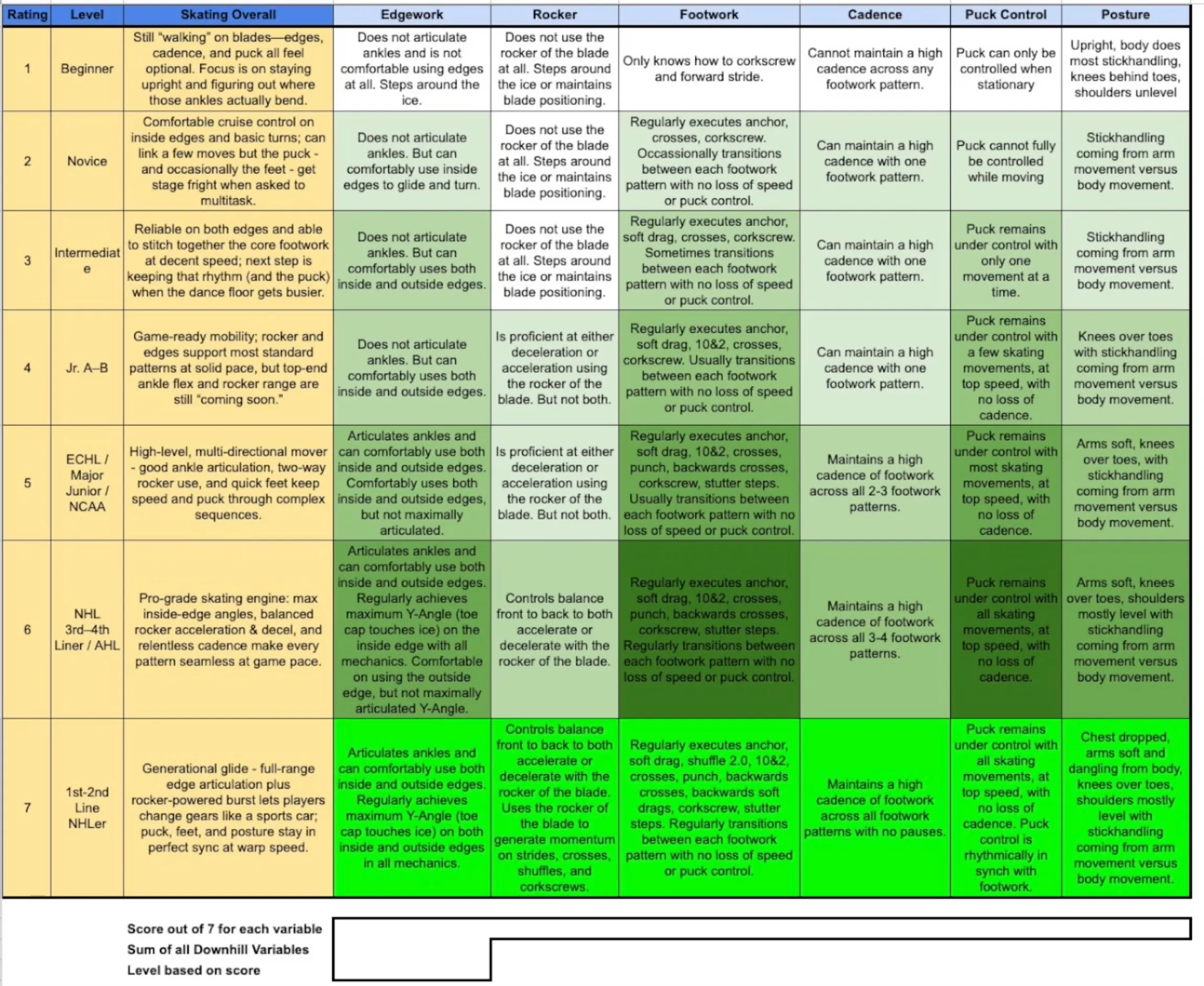
Jason Yee created a comparison table of the movements of players at different levels. Young talents often stall around row 5, while McDavid is at row 7.
How Do Ice Hockey Talents Rise Above the Rest?
In ice hockey, early-identified talents often stand out from the crowd as young as 8-10 years old, thanks to an accelerated motor learning process. This process allows them to gain a technical, physical and mental advantage over less-trained players, laying the foundation for their later success.
Technical superiority shows itself at a young age. Promising players have more advanced skating - they use both edges of the blade far better, accelerate more effectively and change direction more fluidly. Puck-handling and stick skills are also more impressive: they deke accurately in tight spaces, their shots are stronger and more precise. Faster execution of movement is crucial. Talented players reach the autonomous phase of motor learning sooner, where movements become instinctive. While an average player is still concentrating on their skating or puck-handling, the talented player is already planning the next pass or tactical move, because the technical fundamentals are automatic. This speed and instinct creates an enormous advantage on the ice.
Dominance in game situations also sets them apart. Early talents are agile from a young age, playing quickly in small areas and making fast decisions - the foundation of NHL-style play. A well-trained 10-year-old, for example, can deke around a defender more easily because they decide faster and execute movements more precisely. Less-trained players, still working on mastering the basics, cannot keep pace with this dynamic.
The mental advantage is not negligible either. Early successes - wins, goals and assists - reinforce the confidence of talented players and push them to work even harder. This creates a positive spiral that further increases their advantage.
Less-trained players, by contrast, fall behind in the competition, and their gap grows with each passing day. How does one win a marathon from second place? The person in second must run the final stretch faster than the leader to overtake them at the finish. If NHL prospects are already working with professional staff in world-class environments from age 14, they can only be overtaken in very exceptional cases (late developers). What can improve Hungarian chances? A player who acquires better technical skills than competitors in childhood, and as an import becomes the catalyst for the locals.
Real examples illustrate this process perfectly. As a child, Connor McDavid stood out for his speed and stick-handling, partly because he practised extensively early on in structured environments and at home - in his garage, for example. His motor learning process accelerated, so as a teenager he already played instinctively, enabling him to dominate against lower-level opponents. Similarly, Sidney Crosby took part in professional-grade training as a child, helping him quickly automate skills - such as skating and shooting - allowing him to stand out from his peers from a young age. These children were already scoring hundreds of goals per season at age 9-10 (e.g. Gretzky: 378).
Overall, early-identified ice hockey talents rise above less-trained players through an accelerated motor learning process, technical superiority, faster execution and mental advantages. This early foundation creates the opportunity to become world stars later on.
The Impact of Early Skill Development in Ice Hockey
In ice hockey, the timing of reaching the autonomous phase of motor learning is crucial for adult-level performance. If this phase is reached early - for example at age 8-10 due to intensive training - the time remaining until the growth peak (age 13-15 for boys, 11-13 for girls) allows for refinement and speed increases of skills. This means that most of the techniques used as an adult must be learned as a child, or the given movement will not become instinctive: it may still work in training but will not necessarily be executable in games (generally dependent on the opponent’s speed).
The pre-pubescent period of ages 6-12 is the “golden age” for motor learning. The more time there is between the formation of an instinctive movement and the growth peak, the more repetitions can reinforce neural networks, improving the speed and precision of skills into adulthood.
During the growth peak, the body’s rapid changes can temporarily worsen coordination and motor control, potentially slowing skill execution. If there is more time between the autonomous phase and the peak, the child can optimize their skills during the pre-pubescent period building on a much more stable knowledge base (building faster reaction times and more efficient movement patterns). Post-PHV muscle development further increases speed, now due to strength.
Neural speed depends on plasticity: in childhood the brain rapidly forms new connections, amplified by early sports training. If skating is instinctive at age 9 and the growth peak comes at 13, there are 4-5 years available to maximise neural speed, compared to a shorter window. Therefore early instinct and late maturation can significantly increase the effectiveness of adult-level skills. Conversely, a player who learns more slowly but gains strength early has proportionally much less time to develop their abilities.
Where Our Previous Articles Connect
In our previous articles we covered the odds of making the NHL, the development of world-class players, the training time and biological background required, and motor development through multi-sport participation.
The early autonomous phase is in no way contradictory to multi-sport - on the contrary, research suggests it supports it, because multi-sport contributes to accelerating motor learning and more versatile skill development. Multi-sport improves general coordination, balance, speed and neuromotor skills. This accelerates learning because diverse experiences strengthen neural networks. The instinctive phase is thus reachable sooner, while reducing the risk of injury and burnout (which are drawbacks of early specialisation). So what is the problem? Learning speed. With proper professional support, the NHL can be reached with group training too - but those who succeeded this way typically played across 2-3 age groups simultaneously. With 3-4 ice sessions per day including warm-ups, the training plan already leans heavily toward early specialisation, whose risks we have already written about. For complete motor development, efficiency must be sought with the available time. The key solution lies in the speed and quality of learning (spoiler: this article is about speed - in the follow-up we will focus on the ice hockey-specific professional background).
What Does Individual Training Mean in Ice Hockey? How Does It Accelerate Learning?
Individual training means that a coach works exclusively with one player (1:1 ratio) and designs drills tailored precisely to that player’s needs. This may be skating, shooting or even decision-making on the ice. It does not replace team training but supplements it, focusing primarily on correcting weaknesses or further developing strengths.
Benjamin Bloom’s 1984 research, the “2 Sigma Problem”, showed that individual instruction - where the teacher works with a single student - places even average learners in the top 2% compared to group instruction. Naturally this holds true in sport as well. The success of individual training lies in the speed of learning, since the process leading to the draft can be imagined as a 14-year marathon. The one who “wins” the draft is the one who advances the furthest the fastest over those 14 years. Why? Because of personalisation and focus:
-
Personalised attention and immediate feedback: The coach works exclusively with one player, allowing immediate correction during training, so the player learns faster and with better technique. According to Belfry, this accelerates learning by 20-30%. In group training, the coach’s attention is divided among players, so feedback is delayed or too general.
-
More and higher-quality repetitions: Compared to group training, in individual training the player spends more of the session actively practising. In shooting sessions the difference can be 3-4x (200-400 shots/hour), while in skating technique it can be 2-3x more depending on the methodology. Since correction and feedback are much faster when movement is faulty, movement quality is also better - the player trains more and better in the same amount of time. In mastery learning, the switch between tasks does not come when 7 minutes are up, but when the player is executing the given movement correctly. This is how stacked movements can be learned quickly.
-
Personalised development: The coach designs drills based on the player’s abilities, not a general curriculum. Drills adapted to the learner’s abilities yield a higher success rate and faster progress. On-ice individual variability (e.g. context-based shooting drills = from movement, from different angles to different targets) already provides a +10-20% speed improvement on its own.
-
Higher motivation and flow state: Individual training provides optimal challenge, increasing motivation. In group training, the heterogeneous level can cause many to become bored or frustrated. (Better players are held back by weak drills, while weaker players are frustrated by being unable to execute tasks.)
-
More attention, fewer injuries: In individual training there is no waiting or collisions, so the full session duration is active time. Measurements show that with individual tasks, up to 40 minutes of active practice can be achieved in a 50-minute session, while groups of 10-15 players average around 10 minutes (or less) of active time.
Individual ice hockey training is crucial for reaching NHL level. Learning speed depends on the coach-player relationship, quality repetitions, biological factors and motivation - all of which can be optimised in individual training. Elite knowledge is achieved when young talents have access to this type of training.
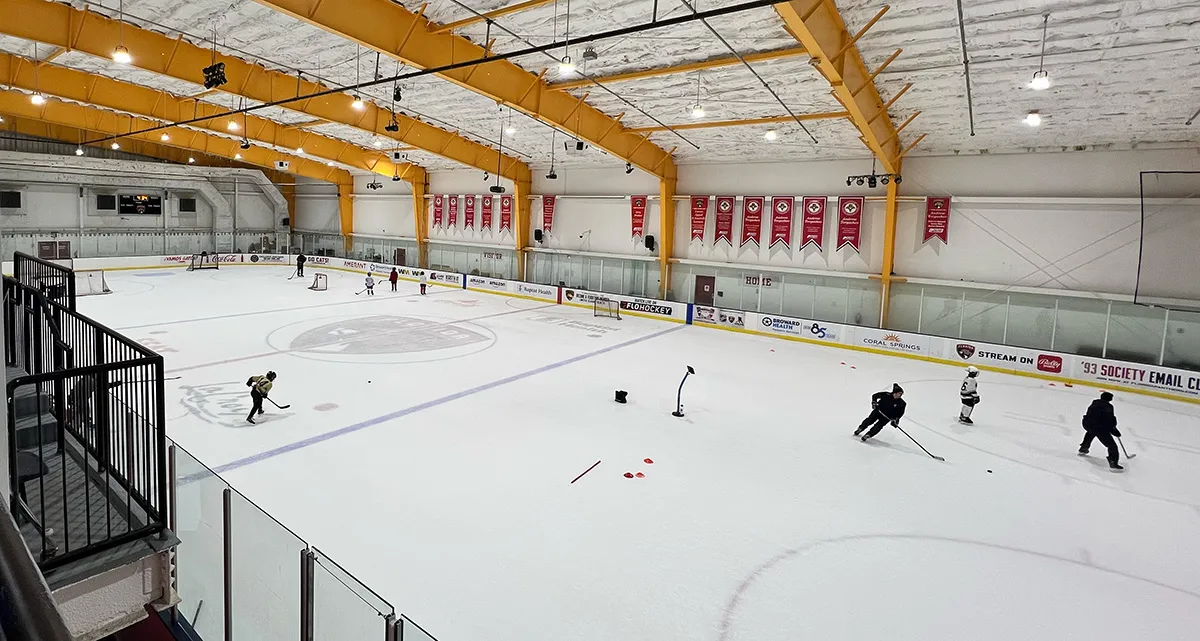
Belfry “layers” skills during individual training - for example, combining shooting technique with decision-making so that it becomes automatic in games. Learning speed in elite individual training depends on four factors:
- Quality and variety of repetitions: Determines 40-50%. In children, agility accelerates through variability of execution.
- Coach-player relationship: Influences 30-40% (trust and feedback: Belfry). Good communication accelerates adaptation; coaching instructions in mechanics are crucial.
- Biological factors: Play a role of 20-30%; myelination is still strong in childhood and adolescence, contributing to the fine-tuning of motor skills.
- Motivation and Flow: Influences 20-30% (according to Csíkszentmihályi, optimal challenge and motivation increase learning speed by +25%). Belfry argues that the flow state accelerates the path to mastery.
How well does this work? It is worth looking at Czech/Slovak teams, where at U10 the best players on teams are very often the coaches’ own children. In team training the parent-coach identifies what is not working, then corrects it and teaches it properly at home. Naturally this trend continues beyond U10, but at that point the larger ice surface and different growth patterns make the difference less visible.
What Is Individual Skill Development?
Individual development is a step-by-step process divided into three main parts, typically over 2-4 training sessions per week with video analysis and immediate feedback.
-
Assessment (10-20% of time): First the coach looks at where the player is. For example, recording on video how they skate, or testing how well they track moving objects. They compare against reference movements to identify weaknesses (e.g. uneven strides), establishing a baseline.
-
Development and correction (60-70% of time): This is the practice phase, where targeted drills address weaknesses. For example, working with resistance skating or agility drills, with up to 200-300 repetitions per session. The coach corrects immediately (e.g. “keep your stick straighter”), and progressively increases complexity (e.g. incorporating decision-making into shooting).
-
Mastery and game integration (20-30% of time): Finally, testing whether the player executes correctly 90% of the time (e.g. hitting the target on a shot). Then the learned skills are practised in game situations (e.g. quick shot under pressure). This aims for automatisation and long-term maintenance.
At the Hockey Talent Academy in the Czech Republic - one of Europe’s finest youth development workshops - anyone can access individual training in addition to the standard team sessions.
Individual, Small-Group and Group Training
The reason for individual training’s effectiveness lies in more repetitions, greater variety and more feedback / individual correction:
| Variable | Individual training | Small-group training (4-10) | Group training (10+, e.g. team session) |
|---|---|---|---|
| Repetition count and attention | Maximum (100% coach focus; immediate, specific feedback). Fast error correction. | High (70-80% focus/player; shared but adjustable feedback). | Low (20-50%; mainly general instructions; less individual correction). |
| Individual adaptation and personalisation | Full (weaknesses in focus, game-performance-improving drills). | Partial (modifications possible; medium variability). | Minimal (general drills; not optimal due to heterogeneous levels). |
| Motivation and engagement | High (autonomy, flow state). | Medium-high (social support). | High social pressure (competition), but lower individual accountability. |
| Community and social skill development | Low (self-focus; little interaction). | Medium (peer support, communication). | High (teamwork). |
| Injury risk | Low (personalised load; conditional adaptation). | Medium (more interaction, less supervision). | Higher (mass movement, collisions). |
| Cost | Expensive (high ROI at elite level; e.g. NHL private coaching). | Medium (shared costs). | Cheap |
| Learning speed and efficiency | Faster (more repetitions, variability; 20-30% faster progress). | Medium (variability, but fewer reps/player). | Slower |
| Estimated shot repetitions (1 hour) | 200-400/player | 100-150/player (increased via rotation; small groups = faster cycles). | 25-50/player (due to waiting). |
The Soviet Model
In the socialist bloc, talent development was not built on purchasable individual training but on a centralised state sports system that prioritised team training. This model spread from the 1950s to the 1980s, particularly in the wake of Soviet successes (e.g. 7 Olympic gold medals 1956-1988). According to IIHF archives, Soviet juniors trained 2-3 times per day on ice at sports schools, where talents were identified early and played up:
- Team training focus: The Soviet model emphasised collective skills (tactics, teamwork) above all, not the refinement of individual technique. Daily 2-3 sessions (e.g. technique in the morning, tactics in the afternoon, strength in the evening) were common, sometimes spanning age groups.
- Early play-up: Talents were moved up to older age groups as early as 8-10 to achieve faster development. This “pressure cooker” method was the foundation of Soviet elite training.
- State support: Free sports schools (e.g. 100+ hockey academies in the Soviet Union) substituted for private coaching, but individual focus was low.
The socialist sports system, especially during the Soviet era, prioritised team training over individual training - considered a more ethical approach compared to the “pay-to-play” model of capitalist countries. Socialist ideology emphasised collectivism and team spirit over individual excellence, though this did not preclude the selection of elite talents - the most gifted players were directed to special academies (e.g. CSKA Moscow), where they received dedicated attention. This ideological foundation and selective system manifested in athlete development, where team training embodied community values while elite groups enjoyed extra resources.
The 1980 “Miracle on Ice” match - where the USA’s amateur team won Olympic gold by beating the professional Soviet squad - was a turning point in Soviet and North American hockey. The defeat highlighted the limitations of the Soviet centralised system, particularly the lack of individual skill development. Although they remained successful into the 1980s (1984, 1988), the setback accelerated the migration of players to the NHL (e.g. Fetisov, Makarov), contributing to the weakening of Soviet dominance. The victory helped increase the proportion of American players in the NHL and drove development of the USA Hockey programme, enabling the USA to become a competitive national team.
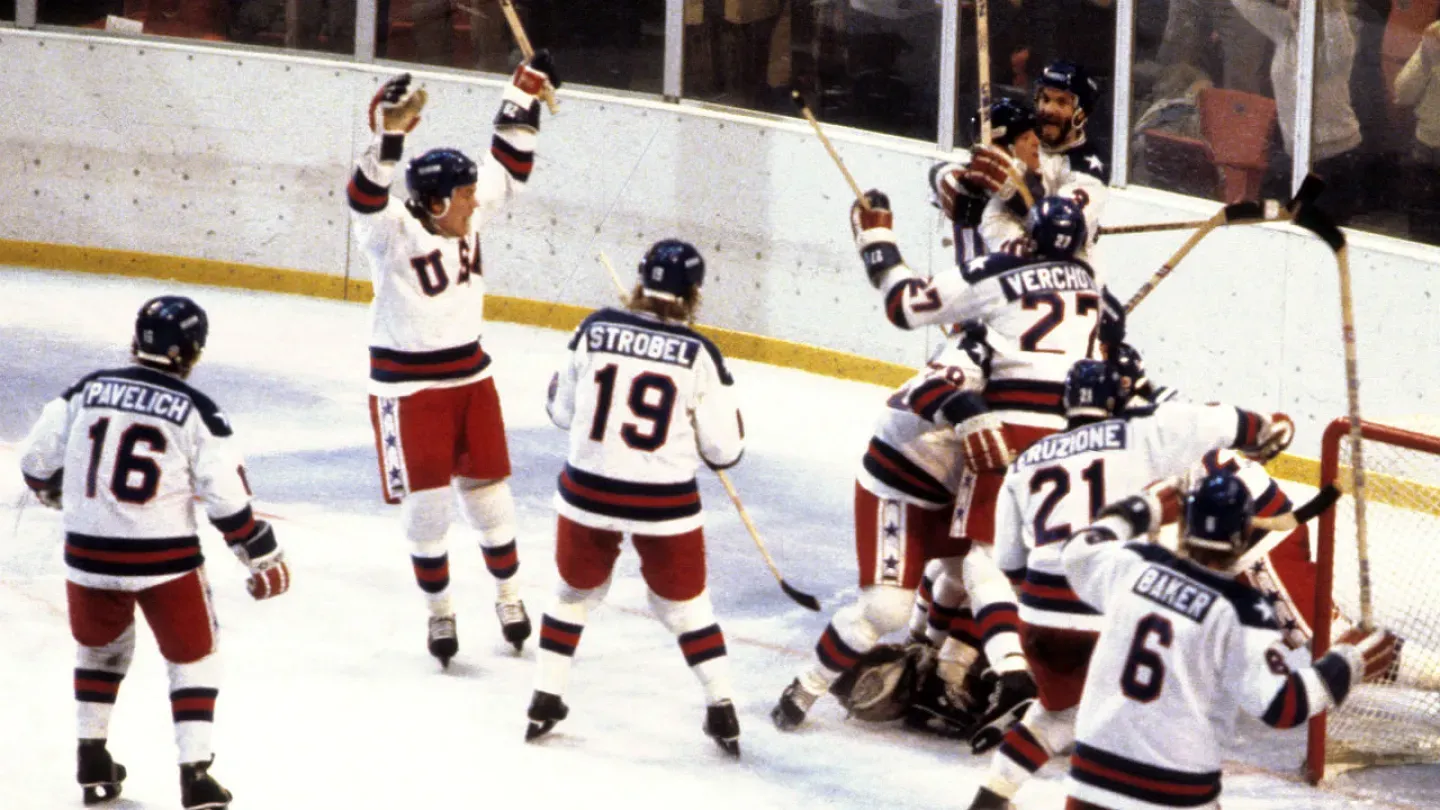
During the Soviet era, paid individual training ideologically did not exist - mass training was the focus. This approach produced spectacular results for the Soviet national team for a long time. However, the model neglected the development of individual technical skills - for example shooting accuracy - even despite elite selection, which later became a disadvantage in the international elite, particularly in the NHL. In the post-Soviet era, with the exception of Ovechkin, players showed weaker individual statistics, partly attributable to a lack of technical fundamentals. The contrast with the US model is striking, where individual training has dominated to this day.
Pay to Play
Key skills in ice hockey can largely be taught through targeted and systematic development, however individual training is unfortunately extremely expensive (due to ice rental and coaching fees). The fees of elite coaches and specialist camps are enormous by Hungarian standards (at this year’s Brick champion team, Toronto Pro Hockey, 1 hour of individual training costs HUF 85,000; a full season membership costs HUF 8 million; and the 4-day Brick tournament entry fee is HUF 2 million) - meaning wealthier families have a significant advantage, financing these costs more easily, which is clearly reflected in later success rates. 75% of NHL players came from financially comfortable family backgrounds as children. Most current stars (e.g. Zach Hyman or Luke Hughes) faced no barrier to purchasing unlimited private coaching. The link between financial background and success is tight: children from affluent families gain easier access to individual on-ice training, which can increase the odds of a player reaching elite leagues by up to 50-70%.
Just how expensive a sport is hockey? Compared to individual training, equipment or foreign game travel costs are minimal. The training time and competition entry fees required for NHL level, as calculated in our previous article, amount to HUF 10-15 million per year in Hungary, whereas the same package in Canada can exceed HUF 30 million annually.
Despite the costs, individual training has become widespread among young hockey players in the United States: 60-70% of players attend 1-3 private sessions per week (USA Hockey 2023). Prices are high, however: one hour of private coaching can cost HUF 27,000-92,000 and a camp HUF 185,000-740,000 per week. While scholarships can help, these support only 20-30% of talented but less affluent players. At elite level, individual training is already considered standard: parents and clubs alike value it, and 80% of NHL draftees received this type of preparation (EliteProspects 2025). Yet equity issues are serious: children from poorer backgrounds are six times more likely to drop the sport due to costs.
Overall, individual training is a purchasable advantage - but success requires not only wealth but also an indispensable work ethic.
The Development Coach’s Knowledge Determines the Achievable Level
The success of individual ice hockey coaching is largely determined by the coach’s professional and sports-science background. The coach’s knowledge sets the ceiling for how much a player can improve - for example, coaches with biomechanical expertise can increase skating speed by as much as 20-30%. This also means that the coach’s competence determines how close the player can get to NHL level: with a less-prepared coach, the development ceiling may be 50-60% of mastery level, while with a coach possessing a high level of professional background, results exceeding 90% are achievable. The secret lies in the fact that the coach’s knowledge ensures the high quality and versatility of repetitions, which is indispensable for perfecting skills.
If the family lacks a professional ice hockey background, an individual private coach is the best solution at ages 8-12, when laying the technical fundamentals is most important. If that is not accessible, small-group training or online training tools offer good alternatives. The professional background of the development coach who works with the child for years is therefore crucial:
- Official coaches: Qualified ice hockey coaches who work in clubs or academies and work with the player over many years.
- Skill coaches: Individual private coaches specialising in technical refinement. During personal development they get to know the player’s strengths and weaknesses, and develop the player with individually tailored drills. Since they are paid by parents, they face performance pressure for the player’s development.
- Mentors: Older players who inspire and informally help with choosing training environments and mastering techniques.
- Parents: Enthusiastic but less trained coaches who typically teach at beginner level. However, in certain cases parents can develop their child to the very highest level (e.g. Troy Crosby, whose work with his son coaches have been trying to replicate for 20 years, mostly with less success). To do this, they must learn the professional background and develop alongside the child.
The Role of the Family
For many elite NHL players (e.g. Sidney Crosby, Connor McDavid, Zach Hyman), the family environment played a key role in early skill development. This is not just about genetic advantages - it is about the factors needed for individual training (coaching support, practice, motivation) being more naturally available within the family:
- Sidney Crosby: His father, Troy Crosby, a former hockey goaltender, taught him the basics of skating and shooting early on with daily individual practice sessions.
- Connor McDavid: His father, Brian McDavid, supported him with early training (e.g. backyard rink), laying the foundation for mastery-level mechanics and agility. He was also Connor’s team coach at U10.
- Zach Hyman: A wealthy family background (father a doctor, mother a lawyer) enabled private coaches and camps, but the father was also actively involved in early development.
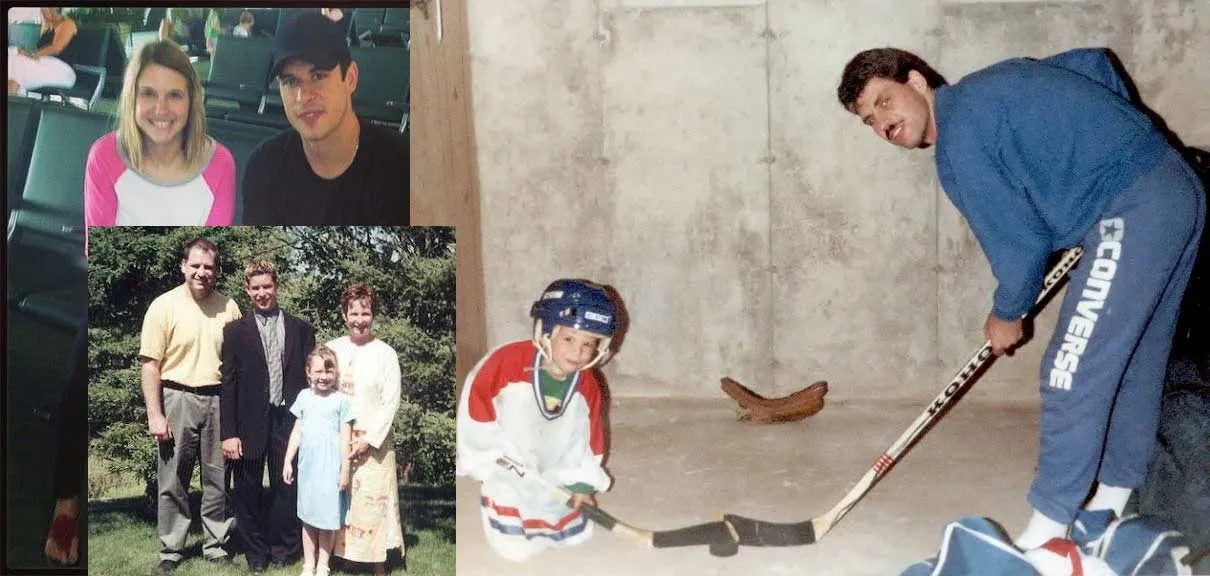
According to Hockey Canada’s 2023 survey, approximately 60-70% of NHL players cite family support (parent coaching, access to ice) as a key factor in their success.
The advantages of family-based learning in terms of the factors required for individual training:
- Low cost: With family training, only equipment and ice need to be purchased, so the volume of practice is determined by the family’s available free time.
- Coach-player relationship: Parents (e.g. fathers who are often ex-players) provide immediate, personalised feedback. According to Belfry, trust and communication are key to adaptation. In a family, this is natural.
- Quality and variety of repetitions: The family environment allows for focused daily practice of 1-2 hours. Meanwhile, variability is natural, which automates motor skills faster.
- Biological factors: An early start (at age 3-5) is generally only achievable within a family context.
- Motivation and flow: Family support (e.g. father-son bonding) increases motivation. In Hyman’s case, parental encouragement was key to the hard work ethic.
Family-based learning partly creates better conditions for individual training, which is the foundation of NHL excellence. According to Hockey Canada, 70% of NHL players come from upper-middle-class families where parents actively support the career (e.g. home ice/rink rental, training time). In contrast, those from poorer financial backgrounds (e.g. Artemi Panarin) are rare (20-30%) and generally achieved success through community support (e.g. scholarships), not family training. Family training in the early years lays the foundation for the later mastery of mechanics, which is then refined by private coaches (Belfry-style).
According to ResearchGate’s 2023 analysis, family background correlates 50-60% with NHL success - but an indispensable work ethic is required alongside it.
Why Is Individual Shooting Training the Most Important?
Despite NHL scouts specifically looking for a “shooting first” mindset - where the player instinctively seeks the shot - shooting is perhaps one of the most undertrained areas in hockey, yet a player’s career most often depends on it.
In ice hockey, goals decide matches, and the NHL’s finest players are true masters of shooting for precisely this reason. Individual training plays a particularly important role here because it develops technique in a personalised way: enabling greater stability, stronger shots and more accurate targeting.
In youth hockey, the efficiency of individual training is most evident in shooting sessions. While a player can typically take 25-75 shots in group training, this number can grow to 200-300 repetitions in individual training - bringing more practice opportunities and better results. According to the Perception Action Podcast, visual perception of moving obstacles - such as defenders and the goaltender - is crucial to shooting success, and this can be most effectively developed through individual training sessions.
Although deflections have one of the highest goal probability rates among shot types, very few players practise them consciously.
Of course, shooting may not be the only decisive factor, but it is certainly one of the most important. It is worth examining all areas:
- Shooting: Individual training is the ideal choice here, because perfecting technique and fine-tuning rapid decisions requires immediate feedback from the coach.
- Skating: This skill is equally essential - in the NHL, skating speed (20-25 mph) and agility are among the indispensable fundamentals. Individual training can develop this by 15-25% (according to PMC 2025 research), though this requires more expertise than improving shooting.
- Decision-making: This area is crucial but harder to practise individually, since team dynamics must also be taken into account. The impact of individual training can bring a 10-20% improvement here, increasing game intelligence.
- Visual skills: Skills such as peripheral vision aid shooting and can be developed 15-20% through individual training. Although they play a supporting role, they are indispensable for successful play.
Individual training supports different skills to varying degrees, but plays an important role in development in each area. Individual shooting is outstanding, however, because according to NHL statistics, 70% of goals depend on the quality of the shot - and individual training is most effective here.